
Podcast: Play in new window | Download
The Value of Internal Mapping
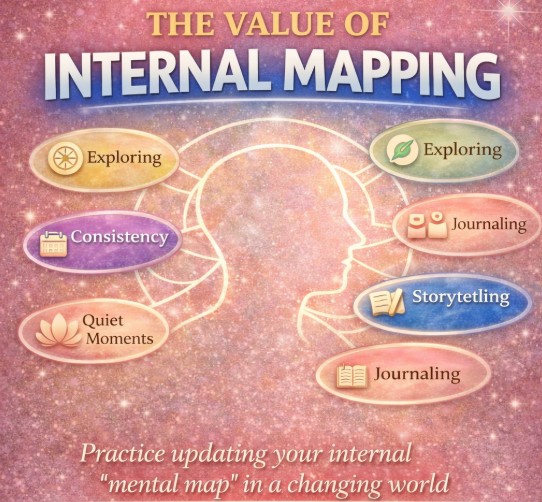
Have you ever walked into a familiar room and known exactly where everything is — even in the dark? That is mental mapping at work, and it is something I have been thinking about a lot lately. On this episode of Mini Miracles From Minor Moments, I am talking about the internal maps we each carry — the personal, invisible guides built from our experiences, our relationships, our neighborhoods, and our memories. These maps shape how we see the world, how we respond to change, and how we find our way when life shifts unexpectedly. I share a story about a chance encounter with a stranger in an oil change waiting room who turned out to have grown up in the same corner of Brookfield, Illinois that I called home for six years. Within minutes, we were laughing about the same streets, the same shortcuts, the same flooded patches we both learned to avoid. That connection reminded me just how deeply our mental maps are woven into who we are — and how powerful it is when two people's maps overlap. This episode is also a practical one. I talk about what happens when our internal maps fall behind our real lives — when we are still reacting to situations that no longer exist, still carrying emotional patterns from chapters that are long closed. And I share simple, grounded ways to update those maps: quiet moments, reflection, consistency, and the kind of storytelling that older generations did so naturally.What's Covered in This Episode
- What mental mapping actually is — and why every one of us relies on it to get through the day
- How our maps are shaped by childhood neighborhoods, favorite foods, familiar songs, and the people who raised us
- Why our internal maps do not update as quickly as life changes — and how that gap leaves us feeling disoriented or stuck
- The gift of multi-generational storytelling and how grandparents and neighbors once helped wire our sense of the world
- Practical ways to enrich your mental maps: exploration, observation, journaling, doodling, and listening to audiobooks
- Why moments of quiet — even just 10 minutes a day — allow the mind to sort, settle, and integrate new experiences
- The role of consistency — in routines, habits, and showing up — in keeping your mental map accurate and your life on track